Astound Spark Private Limited

Blog

Your blog category

Blog

Grain Godowns

INTRODUCTION In the post green revolution era, there is a significant growth in the production and productivity in the Indian agriculture. The country has become self sufficient in food grains and achieved a remarkable growth in the production of pulses, oil seeds and fibers to meet the requirements of the country. Although our farming community toiled hard, they could not get real benefit of the growth in the economy in the absence of a suitable mechanism to ensure a reasonable rate of return to their hard labour and investments. Only a handful of influential farmers who have the infrastructure to overcome the market fluctuations, could derive the benefits.
Blog

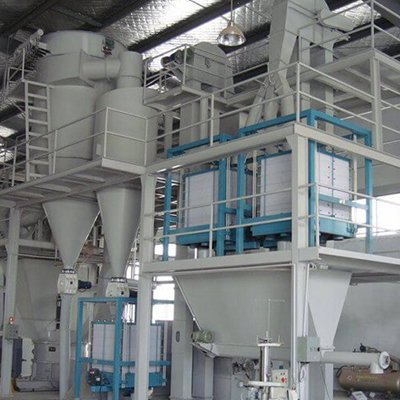
Feed Processing Plant

1. Importance of feed in livestock sector The success of livestock farming is largely dependent on the continuous supply of good quality nutritious feeds at competitive price. Feed alone constitute about 60-70 per cent of total cost of production of livestock products. Therefore, it needs more attention though other factors are also important for remunerative return from livestock enterprises. The farmers used to feed the crop residues to the cattle and buffaloes, however, sheep and goat are normally maintained on grazing/browsing with supplementary feeding of broken grains/other byproducts. Therefore, feeding of balanced concentrate feed to these animals was not common, because of low productivity and unremunerative prices for the livestock products. The improved poultry is fed only with concentrated feed. The requirement of food of animal origin like milk, meat and eggs is increasing at a faster rate due to increased awareness about the significance of protective proteins for the maintenance of human health. The farmers realized the importance and started rearing good quality and high productive animals/birds under stall fed conditions.

Blog

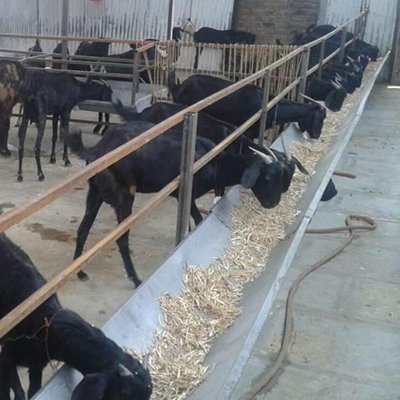
Commercial Goatery

Introduction Goat is a multi functional animal and plays a significant role in the economy and nutrition of landless, small and marginal farmers in the country. Goat rearing is an enterprise which has been practiced by a large section of population in rural areas. Goats can efficiently survive on available shrubs and trees in adverse harsh environment in low fertility lands where no other crop can be grown. In pastoral and agricultural subsistence societies in India, goats are kept as a source of additional income and as an insurance against disaster. Goats are also used in ceremonial feastings and for the payment of social dues. In addition to this, goat has religious and ritualistic importance in many societies. The advantages of goat rearing are :

Blog

Freshwater Prawn Farming

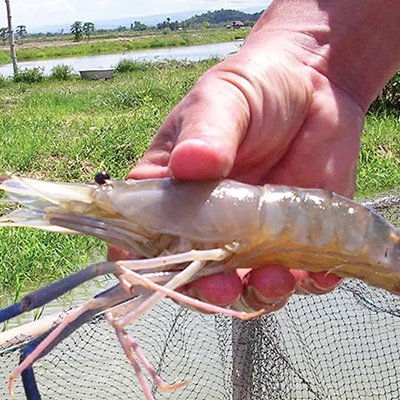
Why do goat rearing? Indian aquaculture has been evolving from the level of subsistence activity to that of an industry. This transformation has been made possible with the development and standardization of much new production and associated techniques of input and output subsystems. In recent years aquaculture has created great enthusiasm and interest among entrepreneurs especially for shrimp farming in coastal areas. Shrimp farming is capital intensive activity and uncontrolled mushrooming growth of it has led to outbreak of diseases and attributed environmental issues calling for closure of shrimp farms.

Blog

Eco-hatchery – For Carp Seed Production

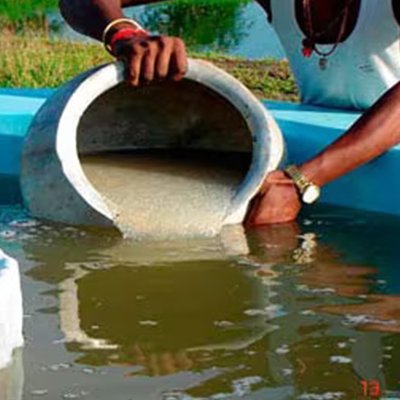
Introduction The commonly cultivated six species – Catla (Catla catla) Rohu (Labeo rohita), Marigal (Cirrhinus mrigala) Silver carp (Hypothalmichthys molitrix), Grass carp (Ctenopharyngodon idella) and Common carp (Cyprinus carpio) are considered to be the best culturable species of fishes in the inland water system. These fishes originally belong to riverine environment and when cultured in standing water bodies such as ponds and tanks, they attain maturity but normally do not breed under confined conditions. Special attempts are therefore made to breed them by artificially creating riverine conditions and stimulating there endocrine system. The technique of breeding fish by other than its natural course is known as INDUCED BREEDING. Induced breeding techniques have been developed for production of quality fish seed of culturable varieties. It is one of the most dependable methods of producing pure seed of desired species of fish. Further this technique has helped to produce fish seed in those areas where natural collection of fish seed was not possible.

Blog

Dugwells In Hard Rock Areas

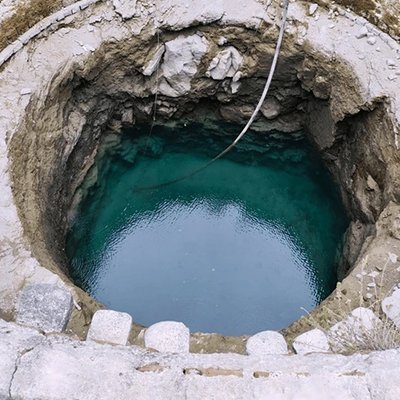
Chapter I Requirements Of A Model Scheme For Formulation By Banks General This document gives broad guidelines for scheme formulation by banks for financing of dug wells in hard rock areas. The aspects that are necessary in scheme formulation are groundwater availability, well design, cost estimates, cropping pattern, pumpset selection and scheme economics.

Blog

Drip Irrigation

Chapter I Requirements of Model Schemes for Formulation by Banks General India is the largest producer of fruits and second largest producer of vegetables in the world. In spite of that per capita availability of fruits and vegetables is quite low because of post harvest losses which account for about 25% to 30% of production. Besides, quality of a sizable quantity of produce also deteriorates by the time it reaches the consumer. This is mainly because of perishable nature of the produce which requires a cold chain arrangement to maintain the quality and extend the shelf-life if consumption is not meant immediately after harvest. In the absence of a cold storage and related cold chain facilities, the farmers are being forced to sell their produce immediately after harvest which results in glut situations and low price realization. Sometime farmers do not even get their harvesting and transportation costs what to talk of the cost of production or profit. As a result, our production is not getting stabilized and the farmers after burning fingers in one crop switch over to another crop in the subsequent year and the vicious cycle continues. Our farmers continue to remain poor even though they take risk of cultivating high value fruits and vegetable crops year after year. A cold storage facility accessible to them will go a long way in removing the risk of distress sale to ensure better returns. This document endeavors to provide information on various broad technical and financial aspects of a cold storage unit to enable the financing banks and entrepreneurs in formulation and implementation such projects.

Blog

Cold Storage For Plantation And Horticulture Produce

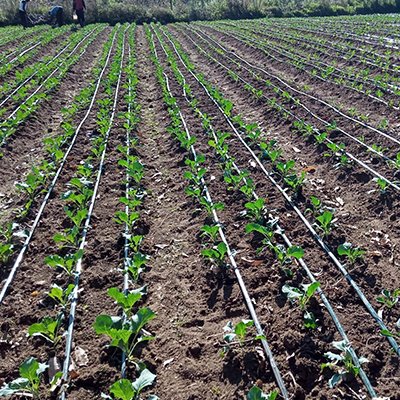
Introduction Drip irrigation, also known as "trickle" irrigation, is the latest method of water management. Under this system, water is carried to the plant under low pressure, through small diameter plastic pipes and delivered at the root zone, drop by drop through drippers. Drip irrigation is widely practiced and established method of irrigation in developed countries and is slowly gaining popularity in India. It is most suited for horticulture crops, vegetables etc. and finds applicability in hard rock areas where groundwater is scarce and helps in optimization of the limited water resources. The system has its advantages and limitations. Its advantages are in terms of savings of water (50-60%) of that required for flow irrigation, effective use of fertilizers, less labour and energy cost. The limitation for adopting of this method is its high initial cost which is beyond the purchasing capacity of small and marginal farmers and thus mainly adopted by large farmers.

Blog

Dairy Farming For Small Farmer

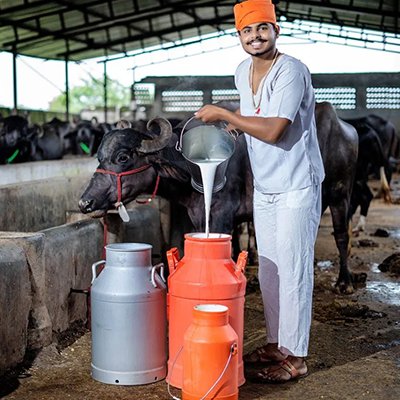
Why do Dairy Farming? Dairying is an important source of subsidiary income to small/marginal farmers and agricultural labourers. The manure from animals provides a good source of organic matter for improving soil fertility and crop yields. The gober gas from the dung is used as fuel for domestic purposes as also for running engines for drawing water from well. The surplus fodder and agricultural by-products are gainfully utilized for feeding the animals. Almost all draught power for farm operations and transportation is supplied by bullocks. Since agriculture is mostly seasonal, there is a possibility of finding employment throughout the year for many persons through dairy farming. Thus, dairy also provides employment throughout the year. The main beneficiaries of dairy programmes are small/marginal farmers and landless  labourers. A farmer can earn a gross surplus of about Rs. 12,000 per year from a unit consisting of 2 milking buffaloes. The capital investment required for purchase of 2 buffaloes is Rs. 18,223/-. Even after paying a sum of Rs. 4294/- per annum towards repayment of the loan and interest the farmer can earn a net surplus of Rs. 6000 – 9000/- approximately per year. (For details see model scheme enclosed). Even more profits can be earned depending upon the breed of animal, managerial skills and marketing potential.

Blog

Composite Fish Culture

Introduction Fish is the cheapest and most easily digestible animal protein and was obtained from natural sources from time immemorial for consumption by human beings. However, due to over exploitation and pollution, the availability of fish in natural waters have declined considerably forcing scientists to adopt various methods to increase its production. Fish farming in controlled or under artificial conditions has become the easier way of increasing the fish production and its availability for consumption. Farmers can easily take up fish culture in village ponds, tanks or any new water body and can improve their financial position substantially. It also creates gainful employment for skilled and unskilled youths. The technology developed for fish culture in which more than one type of compatible fishes are cultured simultaneous is the most advanced and popular in the country. This technology is known as Composite Fish Culture. This technology enables to get maximum fish production from a pond or a tank through utilization of available fish food organisms in all the natural niches, supplemented by artificial feeding. Any perennial fresh water pond/tank retaining water depth of 2 metres can be used for fish culture purpose. However, the minimum level should not fall below one metre.Even seasonal ponds can also be utilised for short duration fish culture.

Select your currency
INR Indian rupee
Scroll to Top