Astound Spark Private Limited

Author name: peerinfotech09

Blog

Onion Storage Structures

INTRODUCTION India is one of the largest producers of onion in the world second only to China, accounting for 16 percent of world area and 10 percent of production. In India, it is grown on 0.39 million hectares with production of 4.30 million tonnes of bulbs per annum (FAO,1995). The current year's production is estimated at 4.7 million tonnes. It is one of the most important vegetable crops of our country and forms a part of daily diet in almost all house holds.Most of the farmers bring onion directly to the market after harvest as proper storage facilities are not available with them. The present storage capacities are quite inadequate and most of the available units are traditional and unscientific. Fearing losses, farmers usually unload their entire stock within a month of harvest. As a result, during this period prices rule very low due to glut situation. Thereafter, the rise in prices is quite rapid and sometimes wide fluctuations occur leading to dissatisfaction amongst the producers as well as consumers. To improve the situation, GOI desired to create appropriate storage structures for onion, both at farm level as well as at market places. It drew a capital subsidy programme for the infrastructure development in which a pivotal role has been assigned to NABARD for its successful implementation. It has been planned to create a storage capacity of 4.5 lakh tonnes of onion during 1999-2000 and 2000- 2001 through capital investment subsidy programme. Subsidy to the extent of 25% of the investment cost subject to a maximum of Rs. 500 per tonne has been proposed to be routed through NABARD for the credit delivery system.
Blog

Milk Processing

INTRODUCTION The Indian dairy industry is contributing significantly to the country's economy, besides improving the health standard by increasing the nutrition value of the food. The value of output from Dairy Sector increased to Rs.5,00,510 million in 1994-95 from Rs.2,75,080 million in 1990 and is expected to reach the level of Rs. 8,50,000 million by the year 2000 A.D.India occupies first position in the world having a total bovine population of 288 million compared to the world's total bovine population of 1420 million. As per 1992 livestock census, the country has about 62.90 million breedable cows and 42.46 million breedable buffaloes (State wise and species/breed wise figures are given in Annexure I). The cross bred cattle are predominant in Kerala, Maharashtra, Tamil Nadu , Punjab and Uttar Pradesh, While buffaloes are very common in Uttar Pradesh, Andhra Pradesh, Rajasthan, Madhya Pradesh, Maharashtra, Gujarat, Punjab, Bihar, Karnataka , Haryana and Tamil Nadu

Blog

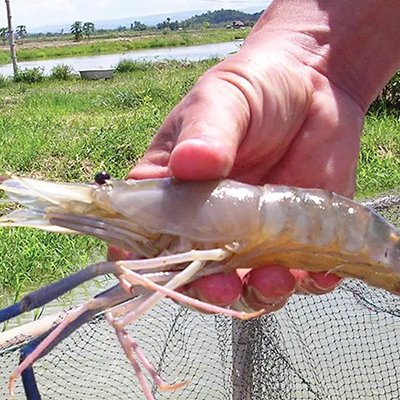
Shrimp Farming In Coastal Districts

INTRODUCTION India is endowed with a long coastline and hence offers scope for large exploitation of marine wealth. Till a few years back, fishermen in India were involving themselves in traditional marine fishing. In the seventies fishermen started concentrating on catching prawns more commonly known as `shrimps' due to high profitable return on the same on account of their export value. Brackish water prawn farming started in a big way during 91-94 especially in the coastal districts of Andhra Pradesh and Tamil Nadu. Subsequently due to disease problems, litigation in supreme court and other social and environmental problems the sector suffered a huge set back and most of the corporate farms were closed. However, the small units continued to do farming and adopting extensive prawn farming systems. The shrimp farming has now been regulated with the establishment of Aquaculture Authority of India as per directions of Supreme Court for issuing licenses and overall supervision. It is commonly said that after Green and White Revolution in India, it is time for Blue Revolution to exploit the huge potential in fisheries sector. Shrimps are called the "Pinkish Gold" of the sea because of its universal appeal, unique taste, high unit value and increasing demand in the world market.

Blog

Mango Cultivation

INTRODUCTION The Indian dairy industry is contributing significantly to the country's economy, besides improving the health standard by increasing the nutrition value of the food. The value of output from Dairy Sector increased to Rs.5,00,510 million in 1994-95 from Rs.2,75,080 million in 1990 and is expected to reach the level of Rs. 8,50,000 million by the year 2000 A.D.India occupies first position in the world having a total bovine population of 288 million compared to the world's total bovine population of 1420 million. As per 1992 livestock census, the country has about 62.90 million breedable cows and 42.46 million breedable buffaloes (State wise and species/breed wise figures are given in Annexure I). The cross bred cattle are predominant in Kerala, Maharashtra, Tamil Nadu , Punjab and Uttar Pradesh, While buffaloes are very common in Uttar Pradesh, Andhra Pradesh, Rajasthan, Madhya Pradesh, Maharashtra, Gujarat, Punjab, Bihar, Karnataka , Haryana and Tamil Nadu

Blog

Jasmine Cultivation

INTRODUCTION Jasmine is one of the oldest fragrant flowers cultivated by man. The flower is used for various purposes viz., making garlands, bouquet, decorating hair of women, religious offering etc. It is also used for production of Jasmine concrete which is used in cosmetic and perfumery industries. More than 80 jasmine species are found in India, of which only three species are used for commercial cultivation. They are Jasminum sambac (Gundumalli / Madurai Malli), J. auriculatum (Mullai) and J. grandiflorum (Jathimalli / Pitchi). The first two species are mainly cultivated for selling as fresh flowers whereas the last one is cultivated for concrete extraction.

Blog

High-density Guava Plantation

INTRODUCTION Guava (Psidium guajava) is one of the most common fruits in India. It is quite hardy and prolific bearer. Guava is a commercially significant, highly remunerative crop even without much care. It is a rich source of vitamin C and pectin. It is also a good source of calcium and phosphorus.Certain important strategies have been identified for enhancing horticulture development in India in order to be competitive in the world market. They involve adoption of modern, innovative and hi-tech methods. One such strategy is the high density plantation (HDP). This includes adoption of appropriate plant density, canopy management, quality planting material, support and management system with appropriate inputs. HDP generally refers to planting at a closer spacing than the normal recommended spacing. It has been attempted in different crops such as guava, apple, banana, mango, pineapple, peach, etc. Many guava farmers have been adopting this technology successfully in different parts of the country. HDP technology results in maximization of unit area yield and availability of the fruits in the market early which fetch better price.

Blog

Grain Godowns

INTRODUCTION In the post green revolution era, there is a significant growth in the production and productivity in the Indian agriculture. The country has become self sufficient in food grains and achieved a remarkable growth in the production of pulses, oil seeds and fibers to meet the requirements of the country. Although our farming community toiled hard, they could not get real benefit of the growth in the economy in the absence of a suitable mechanism to ensure a reasonable rate of return to their hard labour and investments. Only a handful of influential farmers who have the infrastructure to overcome the market fluctuations, could derive the benefits.

Blog

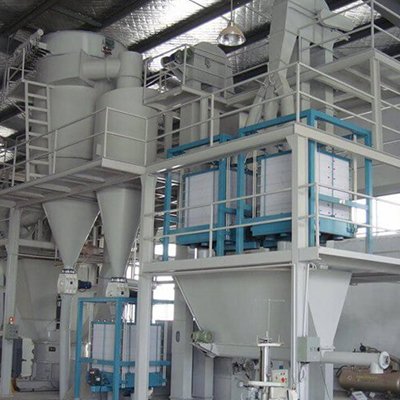
Feed Processing Plant

1. Importance of feed in livestock sector The success of livestock farming is largely dependent on the continuous supply of good quality nutritious feeds at competitive price. Feed alone constitute about 60-70 per cent of total cost of production of livestock products. Therefore, it needs more attention though other factors are also important for remunerative return from livestock enterprises. The farmers used to feed the crop residues to the cattle and buffaloes, however, sheep and goat are normally maintained on grazing/browsing with supplementary feeding of broken grains/other byproducts. Therefore, feeding of balanced concentrate feed to these animals was not common, because of low productivity and unremunerative prices for the livestock products. The improved poultry is fed only with concentrated feed. The requirement of food of animal origin like milk, meat and eggs is increasing at a faster rate due to increased awareness about the significance of protective proteins for the maintenance of human health. The farmers realized the importance and started rearing good quality and high productive animals/birds under stall fed conditions.

Blog

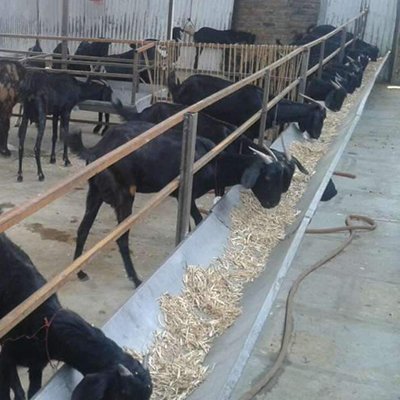
Commercial Goatery

Introduction Goat is a multi functional animal and plays a significant role in the economy and nutrition of landless, small and marginal farmers in the country. Goat rearing is an enterprise which has been practiced by a large section of population in rural areas. Goats can efficiently survive on available shrubs and trees in adverse harsh environment in low fertility lands where no other crop can be grown. In pastoral and agricultural subsistence societies in India, goats are kept as a source of additional income and as an insurance against disaster. Goats are also used in ceremonial feastings and for the payment of social dues. In addition to this, goat has religious and ritualistic importance in many societies. The advantages of goat rearing are :

Blog

Freshwater Prawn Farming

Why do goat rearing? Indian aquaculture has been evolving from the level of subsistence activity to that of an industry. This transformation has been made possible with the development and standardization of much new production and associated techniques of input and output subsystems. In recent years aquaculture has created great enthusiasm and interest among entrepreneurs especially for shrimp farming in coastal areas. Shrimp farming is capital intensive activity and uncontrolled mushrooming growth of it has led to outbreak of diseases and attributed environmental issues calling for closure of shrimp farms.

Select your currency
INR Indian rupee
Scroll to Top